Manchurian Walnut
 Author: Dean Rouseberg
Time for reading: ~2
minutes
Last Updated:
January 27, 2026
Author: Dean Rouseberg
Time for reading: ~2
minutes
Last Updated:
January 27, 2026
CHAPTERS (Table Of Contents)
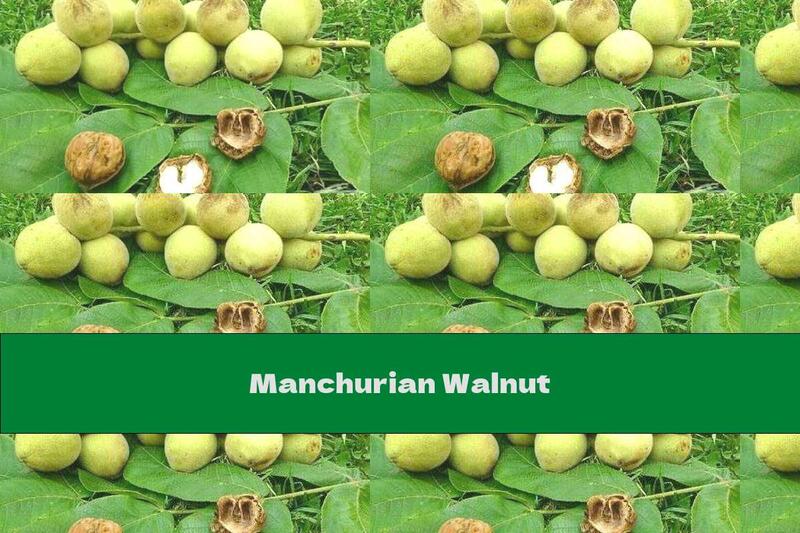
In this article, learn more about Manchurian Walnut. Manchurian walnut - medicinal properties and contraindications.
Manchurian is a close relative of the common walnut, but is less capricious to growing conditions and more cold-resistant.
Chemical composition
Manchurian and common walnuts are similar in composition, and in terms of content of some substances Manchurian is ahead of ordinary.
The fats in the nut are represented by linoleic, oleic, palmitic and stearic acids. Malic and citric acids, tannins and essential oils are also available. Leaders among vitamins are A, B1, B2 and E, and the shell and core are rich in magnesium, potassium and iodine.
Healing properties
Walnut leaves, shells and kernels are useful for humans.
- For disinfection
The leaves of the Manchurian walnut have a high concentration of phytoncides and hydrojuglon. Upon oxidation, hydrojuglon turns into juglon - a substance that destroys bacteria and fungi, disinfects, sterilizes and heals wounds. Given these properties, infusions and decoctions are prepared on the basis of fresh or dried leaves of the plant. The decoction helps with stomatitis, gingivitis, periodontitis and angina. Compresses with the infusion are useful in fungal skin diseases, for disinfection of open wounds, boils and calluses. Yuglon is harmful to parasites and acts as a natural antibiotic.
- In iodine deficiency
Iodine accumulates in the shell and skins of the green fruits of the Manchurian walnut, so the infusion of the fruit is used in the treatment of goiter and hypothyroidism.
- To eliminate inflammation
In addition to disinfecting, juglon can also eliminate inflammation. Manchurian is useful in the treatment of prostatitis, intestinal and gastric inflammations, as well as in inflammations of the oral cavity. A decoction or tincture of the nut is used for this purpose.
- As an analgesic
The substances contained in the fruit are able to dilate blood vessels, eliminate spasms and pain. Walnut tincture is effective as an analgesic in a single dose (not more than 2-3 teaspoons per 100 milliliters of water).
- In diabetes mellitus
Despite its high caloric content, manchuria belongs to the products with a low glycemic index (about 15 units), so it is safe for consumption in diabetes and obesity. The nut does not raise blood sugar sharply, but gradually gives energy to the body. Of course, we must not forget about its high fat and high energy value, so do not eat more than 3-5 nuts a day.
Harm and contraindications
Manchurian walnut and all products prepared on its basis have a number of contraindications, despite the many positive properties for the body.
Infusion of the plant should not be used in:- liver diseases: cirrhosis and hepatitis;
- ulcers and gastritis of the stomach and intestines;
- increased blood clotting, varicose veins and thrombophlebitis;
- individual intolerance;
- kidney stones.
And healthy people should not get carried away with the use of tincture of the plant, as side effects such as nausea, vomiting, dizziness and shortness of breath may occur.
- Walnut oil
- Walnuts - benefits and harms
- Water nut (slingshot, devil's nut, julun)
- Green walnuts
Related Articles
- Nutrition Spotlight: Mushroom and Walnut Bolognaise - Benefits and Recipes
- The Benefits of Mushroom and Walnut Bolognaise for Your Health
- The Benefits of Mushroom and Walnut Bolognaise for a Nutritious Diet
- The Benefits of Mushroom and Walnut Bolognaise: A Nutritious Plant-Based Alternative
- 7 Useful Properties Of Walnuts
Top Nutrition Articles Today
- . Nutrition In Splenomegaly (enlarged Spleen / Spleen)
- . List of Foods that Contain Carrageenan: A Guide to Avoiding...
- . The Role of Calcium Disodium in Nutrition: Benefits, Sources...
- . The Role of K12 in Nutrition: Benefits, Sources, and Recomme...
- . Simple Sugars Foods
- . The Role of Citrate in Nutrition: Sources, Benefits, and Rec...
- . Understanding Energy Balance in Nutrition: Importance, Weigh...
- . 6 Week Challenge Meal Plan: Benefits, How to Create, and Sam...
- . The Truth About Disodium Inosinate: Uses, Safety, and Altern...
- . The Ultimate Guide to Gatorade in Nutrition: Benefits, Usage...