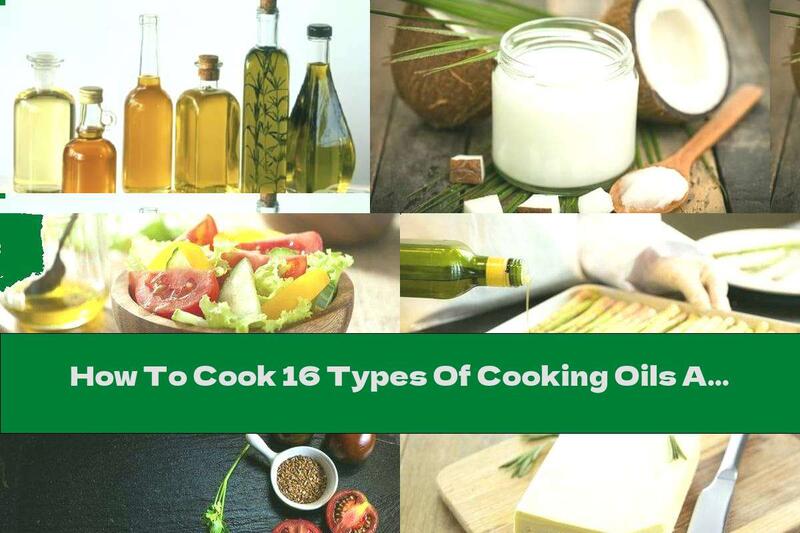
How To Cook 16 Types Of Cooking Oils And Their Advantages And Disadvantages
 Author: Dean Rouseberg
Time for reading: ~2
minutes
Last Updated:
August 08, 2022
Author: Dean Rouseberg
Time for reading: ~2
minutes
Last Updated:
August 08, 2022
CHAPTERS (Table Of Contents)
Learn how to cook "16 types of cooking oils and their advantages and disadvantages - part 1". Delicious recipe.
Animal fats remain solid at room temperature, while vegetable oils are liquid (except for some tropical ones, including coconut and palm).
When choosing cooking fat, it is important to check the temperature at which the oil begins to smoke and disintegrate. You also need to decide if you want the fat to add flavor to the dish, as well as if the overall healthy profile of the particular oil is good. With the exception of butter, all other fats do not contain carbohydrates or proteins. Learn more about these 16 types of oils and their recommended uses.
Coconut oil
Coconut oil is made from the inside of coconuts, and 86% of its fat is saturated. This is one of the favorite oils of people who prefer a healthy diet. The content of medium-chain triglycerides reduces the likelihood of fat being stored as fat and at the same time gives the feeling of satiety. Coconut oil is relatively resistant to heat and rancidity. When you see the inscription "raw pressed" on the label, it means that the oil is extracted without the use of high temperatures and chemicals and can withstand heating up to 180 degrees. If you are looking for an option for higher heat treatment, it is good to choose refined coconut oil.
Walnut oil
This oil has a rich walnut flavor, it is not recommended for cooking because it is not resistant to heat - it is best to use it in salads and for cold cooking. Store in the refrigerator for up to 6 months. A useful property of walnut oil is that it works well in heart disease. According to a 2010 study, people who consume walnuts have lowered their blood pressure, both at rest and in stressful situations.
Sunflower oil
It is extracted from sunflower seeds and is a good source of vitamin E. It can be found in oleic, linoleic or partially hydrogenated form. High oleic oil contains 70% monounsaturated fats, which are known to improve blood cholesterol levels, lower blood pressure and reduce the risk of heart disease. On the other hand, approximately 65% of the fat in the linoleic variety comes from linoleic acid, which most of us consume with processed foods. The partially hydrogenated version may contain trans fats, which worsen cholesterol levels, increase the risk of inflammation and heart disease, and contribute to insulin resistance and the development of diabetes. If you are going to cook with sunflower oil, it is best to look for one with a high olein content.
Flaxseed oil
Flaxseed oil is a great source of omega-3 fatty acids. They are powerful anti-inflammatory drugs that reduce the risk of heart disease, cancer and stroke, while improving brain function. Common in fish, these acids make flaxseed oil extremely important for people who do not consume animal products. Flaxseed oil should not be heated, it is good for salads or cold cooking. Store it in a dark bottle in the refrigerator to prevent oxidation.
Butter
Until recently, cow butter was one of the unhealthy foods, but many studies in recent years have shown that fats are very important for cardiovascular health and have challenged the idea that saturated fats are as dangerous as previously thought. Fat-based diets perform better in the prevention of cardiovascular disease than low-fat diets. However, this does not mean that you have to add oil to everything. Use the product carefully and be careful not to clog it while heating it.
Related Articles
- The Role of Flour in Nutrition: Types, Benefits, and Recipes
- The Role of Additives in Nutrition: Types, Common Additives, Regulations, and Health Concerns
- The Role of Additives in Nutrition: Types, Common Additives, Health Concerns
- The Nutritional Benefits of Toor Dal: Protein-Rich Recipes and Cooking Tips
- The Role of Thickeners in Nutrition: Types, Benefits, and Recipes
Top Nutrition Articles Today
- . Nutrition In Splenomegaly (enlarged Spleen / Spleen)
- . The Role of Calcium Disodium in Nutrition: Benefits, Sources...
- . Melanin In Foods: What It Is Responsible For And How To Incr...
- . List of Foods that Contain Carrageenan: A Guide to Avoiding...
- . Understanding Energy Balance in Nutrition: Importance, Weigh...
- . The Role of K12 in Nutrition: Benefits, Sources, and Recomme...
- . The 45-30-25 Diet: A Balanced Approach to Nutrition
- . The Science of Raising Agents in Baking: Chemical and Functi...
- . The Truth About Disodium Inosinate: Uses, Safety, and Altern...
- . The Role of Water in Nutrition: Importance of Hydration and...