E235 - Natamycin
 Author: Victoria Aly
Time for reading: ~1
minutes
Last Updated:
August 08, 2022
Author: Victoria Aly
Time for reading: ~1
minutes
Last Updated:
August 08, 2022
CHAPTERS (Table Of Contents)
Characteristics: The food supplement E235 (natamycin or pimaricin) is a strain that is obtained artificially by fermentation of Streptomyces natalensis bacteria. The preservative is slightly soluble in
Characteristic
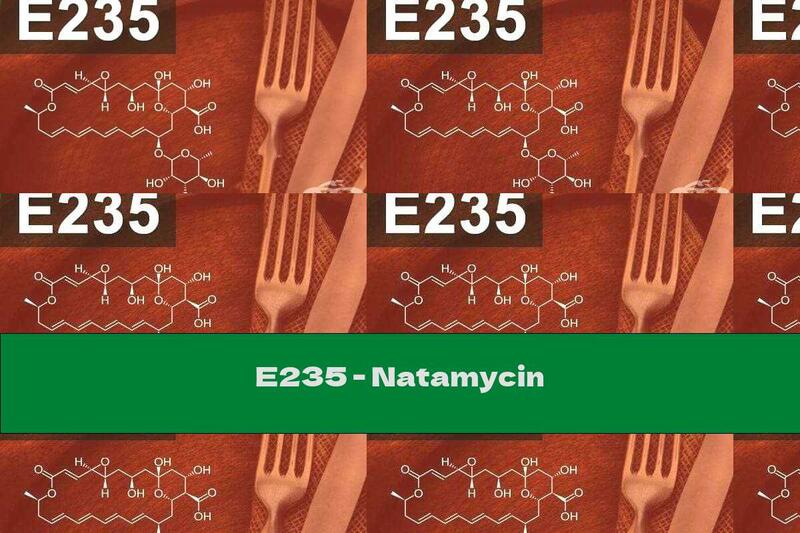
The food supplement E235 (natamycin or pimaricin) is a strain that is produced artificially by fermentation of Streptomyces natalensis bacteria. The preservative is slightly soluble in water and alcohol, it is quite effective even at low concentrations. Natamycin, by origin, is a natural antifungal preservative E 235, which is widely used in the food industry. It is a strong antifungal antibiotic, very sensitive to light, stable in the dark. Refers to substances with a low level of danger to the human body.
Use
The preservative E 235 has been used for many years in the food industry to prevent the development of fungi in meat, dairy products and confectionery. Natamycin is often used in the production of cheese as a shell of the product, remains on its surface because it is applied by irrigating the final product or by immersing it in a solution. In some countries, natamycin sausages are also allowed.
The additive E 235 is widely used in medicine as an antibiotic for the treatment of fungal diseases of the skin, diseases of the gastrointestinal tract and mucous membranes, such as dermatomycosis, candidiasis of the skin and nails, acute atrophic candidiasis, fungal diseases of the mouth, otitis externa, fungal infections. eyes and eyelids and other diseases caused by yeast and similar fungi. Natamycin is used to make suppositories, tablets, creams and suspensions. Unlike lowland, this substance only affects fungi and does not stop the growth of bacteria.
Impact on humans
The food supplement E 235 is not toxic, but at high concentrations (above 500 mg per 1 kg of body weight) it can cause nausea, vomiting, diarrhea. The preservative is an antibiotic, it kills not only the fungi harmful to human vital functions, but also beneficial microorganisms. This is the reason why the substance is used in food products in strictly limited quantities. The maximum allowable daily dose is up to 0.3 mg per kilogram body weight. In some countries, the use of preservatives in the food industry is banned.
Top Nutrition Articles Today
- . Melanin In Foods: What It Is Responsible For And How To Incr...
- . The Role of Calcium Disodium in Nutrition: Benefits, Sources...
- . The Role of K12 in Nutrition: Benefits, Sources, and Recomme...
- . The 45-30-25 Diet: A Balanced Approach to Nutrition
- . List of Foods that Contain Carrageenan: A Guide to Avoiding...
- . The Role of E220 in Nutrition: Preservative, Color Retention...
- . The Role of Water in Nutrition: Importance of Hydration and...
- . Hydrochloric Acid in Digestion: Importance, Symptoms, and Su...
- . The Ultimate Guide to Carbs in Nutrition: Types, Diets, and...
- . The Science of Raising Agents in Baking: Chemical and Functi...