Breastfeeding A Baby With A Rabbit Lip
 Author: Nia Rouseberg
Time for reading: ~5
minutes
Last Updated:
January 27, 2026
Author: Nia Rouseberg
Time for reading: ~5
minutes
Last Updated:
January 27, 2026
CHAPTERS (Table Of Contents)
It will take a lot of effort on the part of both the infant and the mother to breastfeed a baby with this birth defect.
What is a rabbit's lip and a cleft palate?
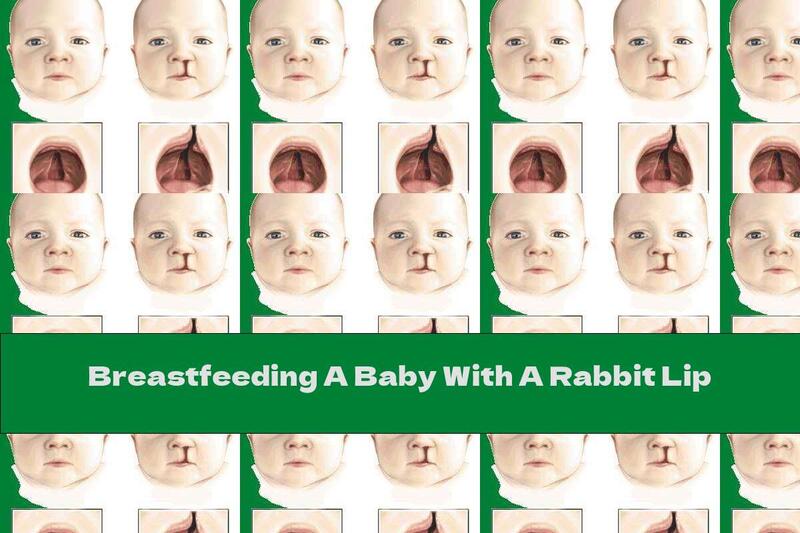
Malformation, which is a gap between the two sides of the upper lip and a gap between the two sides of the palate.
Rabbit lip is one of the most common birth defects that a baby can be born with. It is formed during fetal development. The condition is also known as cleft lip or orofacial cleft. It is referred to as mild when only the lip is affected and more severe if the palate and / or nose is affected.
Statistics show that of all babies born with this defect, one third have only cleft lip, one third have only cleft palate and the remaining one third have cleft mouth and cleft palate.
Newborns with cleft lip and palate, like all other babies, need to learn how to feed successfully in order to develop and grow.
What is the treatment?
Surgery is needed, which can be done 48 hours after the baby is born if only the lip is affected. If the palate is affected, the operation is usually performed within the first or second year of the child's life before he or she begins to speak.
Is breastfeeding possible?
During breastfeeding, the lips and palate help to create the vacuum needed to suck milk from the mother's breast. If the lip and palate are not formed properly, then the baby will not be able to properly absorb the breast and create the necessary vacuum to latch.
If the baby has only a rabbit's lip, he may be able to eat normally using standard breastfeeding techniques.
Those born with a cleft lip and palate, or only the palate, have an opening in the roof of the oral cavity, and it is also possible to have one between the mouth and nose. This opening in the palate makes it difficult to create the vacuum needed to suck milk from a bottle or breast, and milk is also likely to enter the airways. This means that babies with cleft palate are at risk of low weight gain because they use a lot of energy to feed. Still, there are possibilities - they depend on the crack, the size of the breasts and the softness of the nipple.
What are the possibilities?
It will take a lot of effort on the part of both the infant and the mother to breastfeed a baby with this birth defect. And yet, as mentioned, natural nutrition in these babies is possible if:
- during breastfeeding, the breast tissue can fill the opening in the lip, which ensures good suction of the baby (when it comes only to the cleft lip);
- if the nipples are softer and the baby manages to compress enough to create the necessary seal and tighten;
- the mother holds the crack with her hand while the baby is feeding, this would also be helpful and will facilitate feeding.
How to make breastfeeding easier?
To make it as easy as possible for your baby and yourself, it is best to contact a breastfeeding consultant. From him you will receive the most correct information and advice about the process of breastfeeding. He will guide you on how to prepare and what poses will be most appropriate for this problem.
When you start feeding the baby, you could support his jaw and chin until he takes the breast properly. After the baby takes the nipple, you will have to try to keep it in the center of the mouth. Do not allow the nipple to escape to the crack. It is necessary to keep the baby in a slightly upright position (even sitting) so that breast milk does not get into the nose (this applies regardless of whether the child takes milk from the breast or from a bottle).
How to feed a baby with a cleft palate?
When the palate is also affected, babies usually need special bottles and techniques to eat well, whether or not they have a rabbit lip. With them, it is rarely possible to breastfeed or use a regular feeding bottle.
A baby with a cleft palate cannot create the vacuum needed to receive breast milk or a bottle. If you are planning to breastfeed your baby, the best option is to express breast milk and feed with the help of specially designed accessories.
Breast milk is considered the ideal food for all babies. It reduces the risk of middle ear infections in babies with a cleft palate.
Often mothers who have been looking forward to breastfeeding feel very sad that they will not be able to. But you should not give up! Seek help from specialists who will help you with eating techniques and maintaining closeness with your child.
However, the only way to breastfeed a baby with a cleft palate is to use specially designed prostheses that are placed in the mouth and close the defect.
There are other specially designed accessories for children with impaired sucking abilities (as is the case with rabbit lips). Here are some of them:
Supplementary feeding systemThis system consists of a milk container and different sized tubes. A chain is attached to the container, which the mother puts on her neck while feeding the baby. When breastfeeding begins, the tube should be placed close to the nipple so that the baby can receive milk from the breast and the system;
Specially designed bottles
These are specially designed bottles for babies who have impaired suction capacity.
One version of this bottle has a silicone pacifier with a special valve that allows the flow of milk to be regulated.
Another option is to use a soft bottle in which the milk flows when you squeeze it. Before you start the first meal, you could put some water in it and do a few experiments on how much liquid comes out of the bottle when pressed. This will help you get an idea of how hard you need to squeeze the bottle and how much milk the baby will receive.
Pacifiers
Specially designed for babies with special needs. The pacifier has a Y-shaped cut at the top, and at its base there is a V-shaped deaerator. It is suitable for use on different types of bottles. Available in different sizes. The one-way pacifier valve only works by compression. No squeezing required. When the baby starts breastfeeding, it controls the flow of milk.
Why is breast milk important?
- breast milk provides support for the immune system, which reduces the incidence of various infections (ear, respiratory);
- breast milk will help prevent hearing, speech and language problems (often a cleft palate requires therapy with a speech therapist).
Prevention
To avoid this congenital condition, it is necessary for future mothers to take 400 μg during the first trimester of pregnancy. folic acid per day. They should also avoid - alcohol, drugs, medications (steroids, anti-inflammatory, anticonvulsants).
- How to feed a breastfeeding woman
- Diarrhea in breastfed babies
- How to eliminate nighttime breastfeeding
- Natural means of stopping breastfeeding
Related Articles
- Nutrition for Respiratory Health: Supporting Your Lungs with the Right Foods
- Boost Digestive Health with Buffer 500 - Benefits & Recipes
- Boost Your Health with Buffer 500: Benefits, Recipes, and More
- Nutrition and Libido: Enhance Your Sex Drive with the Right Foods
- Nutrition and Libido: Boost Your Sex Drive with Healthy Eating