Soy Relieves The Symptoms Of Menopause
 Author: Mark Velov
Time for reading: ~2
minutes
Last Updated:
August 08, 2022
Author: Mark Velov
Time for reading: ~2
minutes
Last Updated:
August 08, 2022
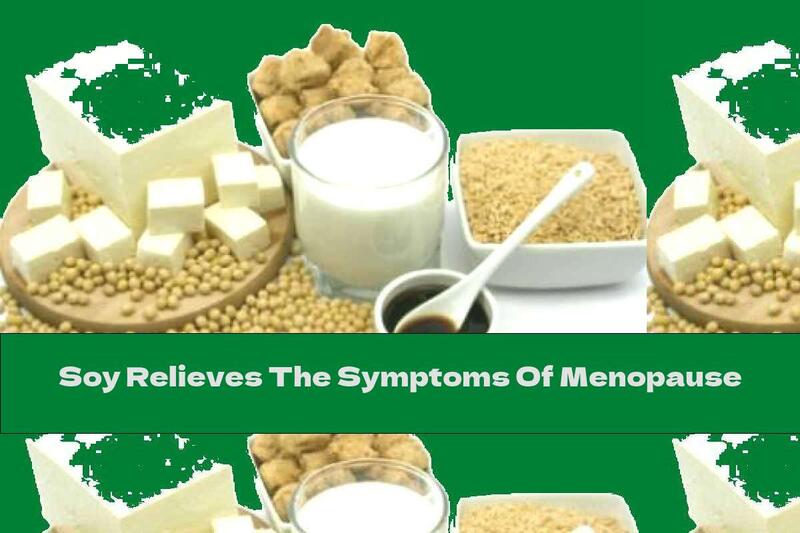
Menopausal women who take a certain type of soy supplement in the long run are not at increased risk of breast cancer or other adverse effects, according to a new study ...
Menopausal women who take a certain type of soy supplement in the long term are not at increased risk of breast cancer or other adverse effects, according to a new study conducted within two years.
However, the authors of the study point out that the results cannot be applied to all soy supplements. The ones used in the study contain a different combination of estrogen-like compounds called isoflavones. The positive effect of the action of the phytohormone is expressed in the reduction of various complaints and ailments during menopause.
Due to its estrogen-like properties, soy isoflavones have been proposed as an alternative to hormone therapy for women experiencing menopausal symptoms. Although there is little evidence from the current study that supplements can cause harm, the researchers added that they allow women to consume up to four times more isoflavones contained in a typical Asian diet.
However, there is no in-depth research on the safety of consuming large amounts of soy in the long run, said Dr. Francine Steinberg of the University of California, Davis. The analysis was published in the American Journal of Clinical Nutrition.
For the study, researchers analyzed data from the Osteoporosis Prevention Soybean Study (OPUS). Preliminary analysis of the results shows that soy supplements do not affect breast density, an indicator of breast cancer risk. In the current study, the researchers included the results of blood tests and various medical tests to determine if there was a risk of taking soy.
The study involved a total of 403 women, including 134 taking placebo preparations, 135 taking 80 milligram soy tablets and 134 taking 120 milligrams.
The researchers identified several differences in blood tests between women taking placebo and those taking soy supplements. Only one is not a statistical indicator, which may be due to chance, according to Dr. Steinberg. It turns out that women who consume soy have elevated levels of urea in the blood, which are still within normal limits, the researchers explain. Renal function is assessed by measuring blood urea.
No differences were observed in blood pressure, as well as in the results of smears, thickness of the lining of the uterus and other health and screening tests. One group of women taking 120 milligrams of soy had breast cancer, she drank the supplement for 14 months. Uterine cancer was developed by a woman taking 80 milligrams of soy. However, scientists believe that the presence of only these two cases of cancer is a lower rate than should be expected in menopausal women.
The researchers said that the soy supplements used in the study were different from those used in other studies or commercially available. The proportions of isoflavones used in the study - 54% daidzein, 34% glycitein and 12% genistein - differed significantly from the common OTC supplements, which may contain up to 50% genistein, as well as isoflavones from other plant sources of soy.
Related Articles
- Nutrition Strategies for Managing Muscular Dystrophy Symptoms
- Nutrition and Gastroparesis: Causes, Symptoms, and Dietary Recommendations
- Nutrition and Fibroids: 7 Herbs to Manage Symptoms
- Herbs for Fibroids: Natural Remedies to Manage Symptoms
- Vitamin B6: Importance, Sources, Benefits, and Deficiency Symptoms
Top Nutrition Articles Today
- . Nutrition In Splenomegaly (enlarged Spleen / Spleen)
- . The Role of Calcium Disodium in Nutrition: Benefits, Sources...
- . The Role of K12 in Nutrition: Benefits, Sources, and Recomme...
- . List of Foods that Contain Carrageenan: A Guide to Avoiding...
- . Understanding Energy Balance in Nutrition: Importance, Weigh...
- . Melanin In Foods: What It Is Responsible For And How To Incr...
- . The 45-30-25 Diet: A Balanced Approach to Nutrition
- . The Science of Raising Agents in Baking: Chemical and Functi...
- . The Truth About Disodium Inosinate: Uses, Safety, and Altern...
- . The Ultimate Guide to Carbs in Nutrition: Types, Diets, and...