Quinoa For Headaches And Heart Problems
 Author: Victoria Aly
Time for reading: ~1
minutes
Last Updated:
August 08, 2022
Author: Victoria Aly
Time for reading: ~1
minutes
Last Updated:
August 08, 2022
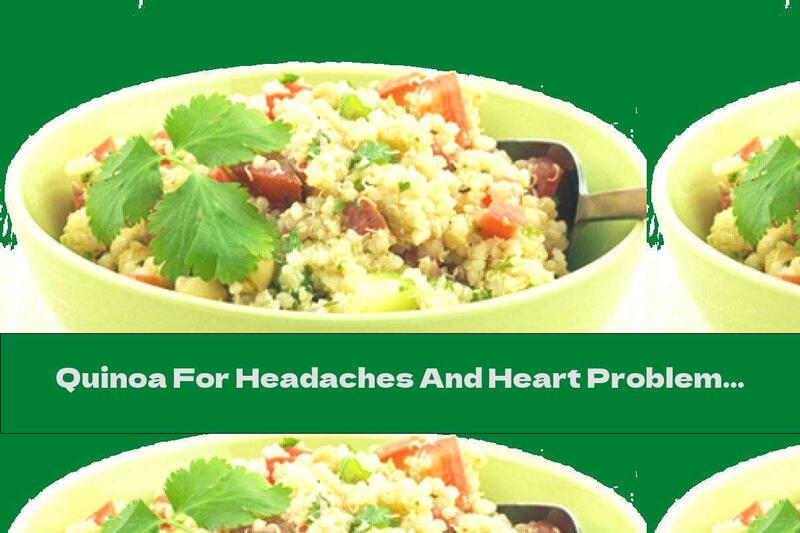
Contains 8 amino acids needed by the body, vitamins, minerals iron, calcium, magnesium.
Quinoa has been cultivated for over 4,000 years. It originates from the Andean region, South America. Its name means "mother of beans", although quinoa is actually the seed of the plant.
The small grains of quinoa contain a combination of 8 amino acids needed by our body, as well as carbohydrates, fats, vitamins, minerals iron, calcium and magnesium.
The seeds of the plant are rich in protein - 16.2%. Some varieties of quinoa contain over 20% protein.
The seeds are also rich in plant fibers. A cup of dried quinoa contains only about 320 calories.
Organic quinoa does not contain gluten. It also has a low glycemic index, which makes it a suitable food for diabetics.
Due to its magnesium content, quinoa is useful against headaches and migraines. According to research, high levels of the mineral in the body are associated with a reduced frequency of headache episodes.
Quinoa is also a good source of riboflavin, which is needed for proper energy production in cells. Vitamin B2 has also been shown to help reduce the incidence of migraine attacks, and the effect is thought to be due to improved energy metabolism in the brain and muscle cells.
Consumers of more magnesium-rich foods have a reduced risk of ischemic stroke, according to an analysis of 7 international studies of 250,000 people.
Quinoa helps reduce the risk of developing cardiovascular disease. A number of studies have shown that consumption of whole grains and dietary fiber reduces the risk of high blood pressure and heart attack.
The fiber content of whole grains prevents the formation of blood clots, which can clog a coronary artery and cause a heart attack.
Consumption of whole grains and products can lower the levels of "bad" cholesterol, triglycerides and insulin, which reduces the risk of cardiovascular disease.
Harvard researchers have found that 2-3 servings a day, mostly of whole grain bread and breakfast cereals, reduce the risk of heart attack by up to 30%.
Quinoa should be washed thoroughly before cooking to remove the bitterness of its surface. It can be used as a substitute for rice, as a side dish, as well as in salads, soups, meat dishes, desserts.
Related Articles
- Nutritional Benefits of Beef Heart: A Complete Guide
- The Ultimate Guide to Quinoa: Nutrition, Benefits, and Recipes
- The Nutritional Benefits of Beefheart: A Complete Guide
- Nutritional Benefits of Ox Heart: A Lean Protein Source
- The Power of Calcium Lactate: Benefits for Bone, Muscle, and Heart Health
Top Nutrition Articles Today
- . The Role of Amylase in Nutrition: Importance, Function, and...
- . The Role of Additives in Nutrition: Positive and Negative Ef...
- . The Role of E220 in Nutrition: Preservative, Color Retention...
- . The Impact of Coca-Cola on Nutrition: Caloric Content, Blood...
- . The Nutritional Benefits of Fish Roe: A Superfood for Your H...
- . The Truth About Potato Chips: Health Effects and Alternative...
- . Carbs to Sugar Conversion Chart: Monitoring Carb and Sugar I...
- . The Role of Water in Nutrition: Importance of Hydration and...
- . The Ultimate Guide to Vitamin E in Nutrition: Benefits, Sour...
- . The Relationship Between The Liver And Hemoglobin: We Unders...