How Useful Is Sourdough Bread?
 Author: Leticia Celentano
Time for reading: ~2
minutes
Last Updated:
August 08, 2022
Author: Leticia Celentano
Time for reading: ~2
minutes
Last Updated:
August 08, 2022
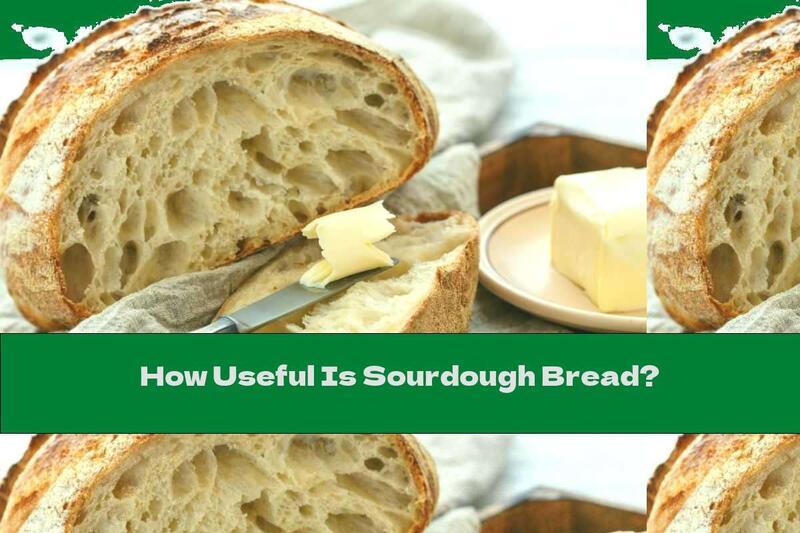
In this article, learn more about How Useful Is Sourdough Bread?. Yeast bread has a beneficial effect on intestinal health. Why?.
Yeast bread has a specific sour-sweet taste, which is why it is preferred by some. It is not the bread we are used to, but it definitely turns out to be more useful than the ones traditionally offered in stores.
Yeast bread is healthier and the most suitable option in case of digestive problems. Despite the roasting process, the fermented liquid used to make it has its contribution to improving the intestinal microbiome.
Gastroenterologist Dr. Will Bulsevich told Bustle.com that sourdough bread is the best form of white bread. It turns out that in its production due to the presence of the fermented product there is a natural reduction of gluten . Yeast also plays a role in changing the bioactivity of the ingredients contained in the flour. More fiber is obtained , which has a positive effect on intestinal health and the composition of the microflora, stimulating the growth of beneficial intestinal bacteria .
The presence of a fermented product in the composition of the bread gives it a specific taste, which is achieved naturally without the addition of other improvers, from which health generally suffers.
Of course, the big disadvantage of sourdough bread is that it is a dough product. Due to the high consumption of human pasta, today we have lost enough fiber intake, which is detrimental to our health as a whole. Refined carbohydrates, such as flour, are absorbed too quickly by the small intestine. As a result, part of the composition of the natural intestinal microflora is lost and the presence of microorganisms that love carbohydrates and are involved in the occurrence of inflammatory processes increases.
Of course, sourdough bread may not have the same beneficial effect as fermented foods, as lactobacilli, for example, are lost in the baking process.
During the preparation of bread , lactic acid is formed, which breaks down phytic acid, which is a great plus.
Why? Phytic acid is contained naturally in the beans, does not allow them to germinate. The phosphorus in this compound is indigestible to the body. In addition, it has high chemical activity and binds easily with minerals such as copper, calcium, zinc, iron and others. , that is, it suppresses their absorption. This way we lose the useful elements, even if we have taken care to get them through nutrition. The enzyme phytase, which breaks down phytic acid, is unstable and, given that it is not synthesized by our body, creates conditions of insufficiency, which is detrimental to intestinal health.
The best version of sourdough bread is kneaded with wholemeal or rye flour. Both species produce a wide range of gut-beneficial substances, such as the essential branched-chain amino acids BCAAs . These are combinations of three amino acids with a branched molecular structure - leucine, isoleucine and valine, which in one way or another affect muscle health.
It should be noted that how and whether sourdough has a positive effect on the intestinal microbiome is very individual. Studies show that intestinal health in half of people has a positive effect on its consumption, but for the other half white bread from the store is the better option. Experts suggest that this is due to the peculiarities of the intestinal microflora in each, as well as depends on other personal factors. In any case, the breakfast of a roll of wholemeal sourdough bread with a slice of avocado is a friend of our intestines.
Top Nutrition Articles Today
- . Nutrition In Splenomegaly (enlarged Spleen / Spleen)
- . The Role of Calcium Disodium in Nutrition: Benefits, Sources...
- . Melanin In Foods: What It Is Responsible For And How To Incr...
- . List of Foods that Contain Carrageenan: A Guide to Avoiding...
- . The Role of K12 in Nutrition: Benefits, Sources, and Recomme...
- . Understanding Energy Balance in Nutrition: Importance, Weigh...
- . The 45-30-25 Diet: A Balanced Approach to Nutrition
- . The Science of Raising Agents in Baking: Chemical and Functi...
- . How To Dry Hawthorn
- . The Truth About Disodium Inosinate: Uses, Safety, and Altern...