How Useful Is Cheese?
 Author: Nia Rouseberg
Time for reading: ~1
minutes
Last Updated:
August 08, 2022
Author: Nia Rouseberg
Time for reading: ~1
minutes
Last Updated:
August 08, 2022
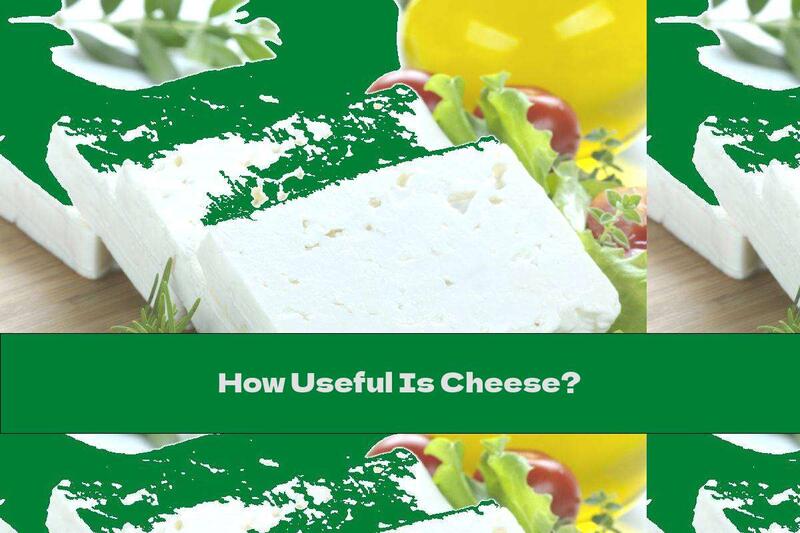
In this article, learn more about How Useful Is Cheese?. What useful nutrients does cheese contain?.
Yes, cheese and yellow cheese are rich in nutrients and delicious, but it is better to consume in moderation. They contain nutrients such as calcium, protein, vitamin B12 and zinc.
Kelly Pritchett, a nutritionist at the Academy of Nutrition and Dietetics , explains that the product is high in calories that can easily accumulate in the body.
Soft cheese, also called unripe or fresh cheese, contains fewer calories than hard cheese.
Yellow cheese and cheese are high in saturated fat, which is known to raise cholesterol .
Some studies (supported by the Danish Dairy Laboratory) show that high-fat cheeses do not have as negative an effect on cholesterol as expected based on their saturated fat content. Experts do not have an exact answer as to why this is so, but suggest that it is related to other nutrients in their composition that alter the body's absorption.
Cottage cheese contains the least amount of fat - 1.7 g, ricotta - 8 g, mozzarella - 11 g, feta - 15 g. Parmesan and cheddar have the highest fat content, respectively, 17 g and 21 g.
In case we do not want to raise our cholesterol levels, it is better to consume softer cheeses, such as mozzarella. Hard cheeses, such as cheddar, are more useful for the teeth . In addition to calcium and other minerals that we extract, eating hard cheese generates saliva, which helps reduce acidity in the mouth and reduces the tendency to caries.
Consumption of dairy products is also vital for keeping bones healthy , as calcium is a building block of bone tissue. Adults - up to 50 years need 1000 mg of calcium per day. After 51 years, the need for it in women rises to 1,200 mg. The same amount is needed for men after 71 years.
Portion restriction is important to keep sodium levels under control, especially in higher-fat cheeses.
Top Nutrition Articles Today
- . How To Properly Switch From Starvation To Normal Nutrition
- . How To Cook Compote
- . List of Foods that Contain Carrageenan: A Guide to Avoiding...
- . Winter Nutrition: Importance, Tips, and Recipes for a Health...
- . The Nutritional Benefits of Raisins for Brain Health
- . How To Pickle Cauliflower
- . How To Thicken Liquid Jam For Baking
- . The 500 Calorie Rule: Implementing Calorie Counting and Port...
- . The Truth About Red 40: Health Risks, Label Reading, and Nat...
- . Nutritional Value of Barley Malt: Benefits, Vitamins, and Re...